*This post may contain affiliate links for which I earn commissions.*
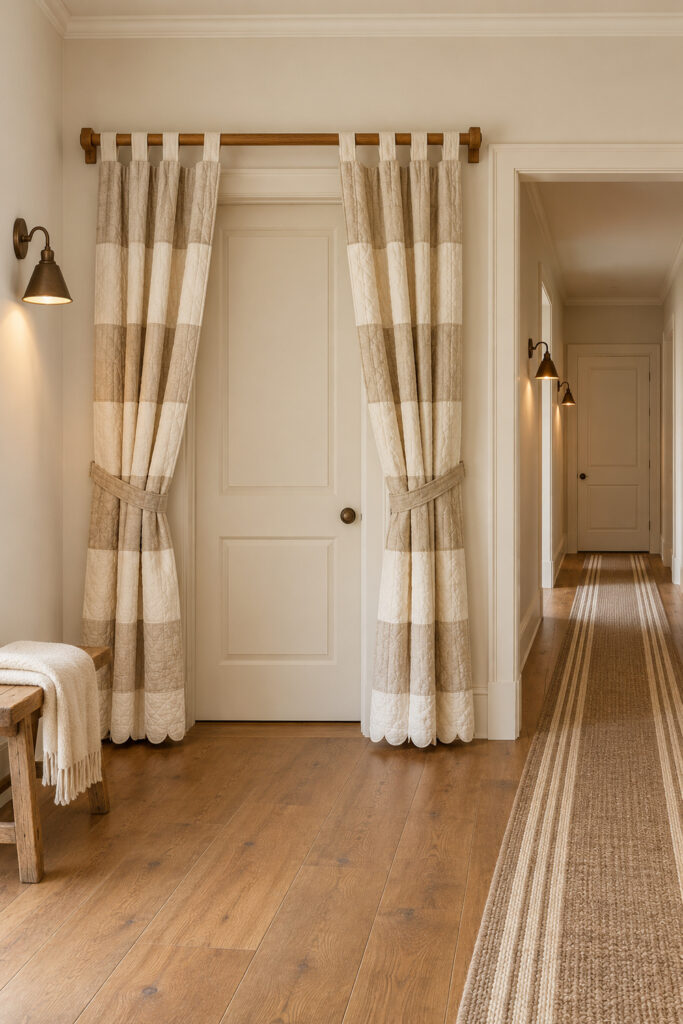
Quilted curtains frame a solid interior door in this winter hallway, turning an ordinary opening into the room’s main decorative feature. Broad oatmeal and ivory blocks run across the panels, with fabric tabs at the top and gently scalloped hems below. Plain tiebacks keep both sides open around the door.
A curtain used at a doorway is often called a portiere. Here, the thick textile brings softness to a passage filled with painted wood, oak flooring, and metal lights. You can borrow the look with suitable ready-made panels or a simpler quilted fabric, provided the doorway remains easy to use.
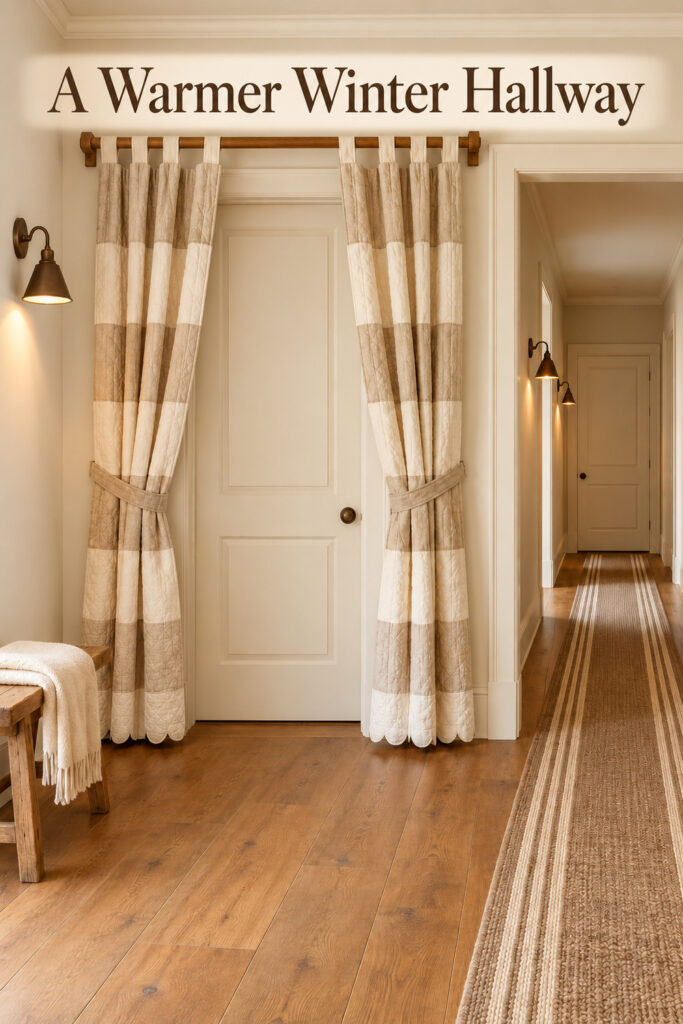
This inspiration image was created with AI and does not show a verified installation or identified purchasable curtains.
Why the Doorway Becomes a Feature
The curtain rod extends across the door trim, making one clear horizontal line above the two hanging panels. Below it, the blocks of pale fabric add width and texture. The closed cream door remains visible between them, so the arrangement reads as a framed doorway rather than a wall of fabric.
The panel colors are close to the surrounding paint, but their quilting gives them definition. Light catches the raised seams and small wrinkles. A plain fabric with enough body could achieve a related effect, while a very thin sheer would change the proportions and mood.
The striped runner leads the eye toward the adjoining corridor. Its narrower pattern contrasts with the broad curtain blocks, keeping the two textiles distinct. Warm metal wall lights and the oak rod repeat familiar materials without adding more pattern around the door.
Find quilted neutral curtain panels
Browse current Amazon options that can help you recreate this look.
Browse quilted neutral curtain panels on Amazon →As an Amazon Associate I earn from qualifying purchases.
Key Pieces for the Hallway
Quilted Neutral Curtain Panels
Look for quilting with a clear stitch pattern and enough flexibility to gather into folds. Thick bedding is not automatically suitable as a curtain. Weight, backing, washable construction, and how the top edge will hang all matter if you are adapting another textile.
The scalloped hems are a distinctive detail in the inspiration, but they are not essential to the whole effect. Straight hems on a softly quilted pair can still frame the door attractively. If you want scallops, choose finished panels or have the edge constructed properly rather than cutting into a quilt and leaving its filling exposed.
Compare the two panels together before hanging. Broad horizontal blocks will be most noticeable if their transitions sit at similar heights. They need not look mechanically identical, but mismatched bands can draw the eye away from the doorway shape.
A Rod and Brackets Rated for the Load
The visible wooden rod adds warmth above the pale panels. Choose a support system made for the combined weight of both curtains and follow its installation instructions. Decorative appearance alone does not tell you whether a rod or wall fixing can carry heavy quilted fabric.
Check the wall material and the available mounting area above the trim. If you are unsure about the fixings or the door arrangement, get installation advice before drilling. A loose support over a frequently used doorway is not a styling problem to solve with another bracket placed at random.
Tab Tops and Fabric Tiebacks
Wide fabric tabs make the hanging method part of the design. Their soft loops suit the quilted panels better than a dense row of shiny rings would. Ready-made curtains with another quiet hanging style can still work if the hardware does not dominate the top edge.
Tiebacks gather the panels away from the handle and opening. Position them according to how your fabric falls and how the door moves. Check the result with the door fully open, not just closed as shown in the inspiration.
A Narrow Striped Runner
The brown and cream runner connects the foreground to the corridor beyond. Its long stripes support the hallway’s direction while the curtains provide a broad stopping point. Use a runner that fits the actual walking area and lies securely without curling edges.
If your hall is very narrow, leave out the bench and extra textiles before giving up useful floor space. The curtains already add a generous amount of fabric. A clear passage will make the doorway treatment feel better considered.
Plan the Door’s Movement First
Open the door through its full range and note where the handle, top corner, and hinges travel. Look at the wall beside the frame, too. The gathered curtains need somewhere to sit without pushing against the moving door or being trapped behind it.
Do not use this treatment where it would obstruct an exit, required ventilation, a heater, or access to essential equipment. If the opening cannot accommodate fabric safely, borrow the quilted texture elsewhere in the hall. A small wall hanging can carry the material idea without changing the doorway.
Measure from the planned hanging point to the floor, allowing for the tabs or other header. Aim for hems that clear the floor and door movement. The inspiration leaves the scallops visible above the oak floor; fabric pooling here would be less practical than it might be beside a bedroom window.
Consider the width of the stack when each panel is tied back. Quilting adds bulk, so a panel may take more space than its flat width suggests. If possible, test a folded sample or existing textile near the frame before committing to very full curtains.
Arrange the Supporting Details
Once the curtains hang correctly, decide whether the hallway needs anything else. In the image, the small bench and folded throw stay to the side. They echo the pale fabric and wood while leaving the center of the floor open.
Keep wall lighting clear of the panels and follow the fitting’s clearance requirements. Fabric can move when a door opens, so check its reach rather than judging from one still arrangement. A lamp or sconce that looks safely distant in a photograph may need more separation in use.
Let the curtain blocks remain the strongest pattern near the door. A plain wall and a simple runner make the quilting easier to notice. If your hallway already has patterned wallpaper, solid quilted panels may be a more comfortable adaptation than introducing another large check.
The look is visually warm, but the photograph cannot establish how much any curtain will reduce drafts or change room temperature. Choose practical lining and installation according to your needs, and treat the decorating effect as a separate reason to enjoy the textile.
Shop Similar Pieces
Look for Oatmeal and Ivory Quilted Panels
Check the fabric weight, finished length, and care requirements. A clearly described ready-made curtain is easier to assess than an unspecified quilt being sold for another purpose.
Shop Similar Wooden Rods and Suitable Brackets
Buy the support for the load and mounting surface first, then choose the finish. A warm wood tone can repeat existing floorboards without matching them exactly.
Add Plain Tiebacks and a Brown Striped Runner
These help connect the panels to the passage. Keep the tiebacks functional and the rug secure, and leave enough visible floor for the hallway to feel easy to move through.
Final Styling Tip
Test the door, handle, and walking route after the curtains are tied back. When everything works comfortably, adjust the folds so the broad pale blocks and scalloped edge remain visible. Function comes first, and the finished arrangement will look more convincing for it.